
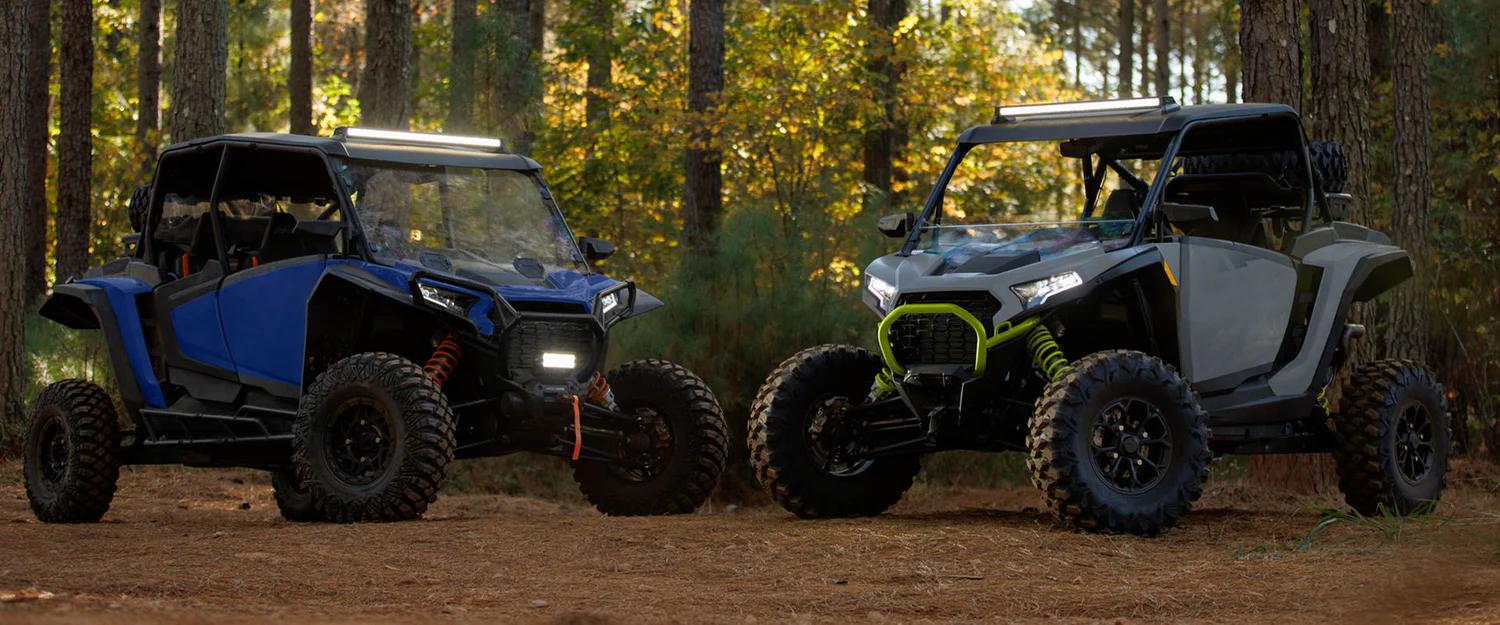
The Europe 4WD UTV Market size is predicted to reach USD 2596.6 million by 2030, at a CAGR of 7.4% from 2025 to 2030. The four-wheel-drive (4WD) Utility Task Vehicle (UTV) market in Europe is experiencing robust growth, fueled by the region’s push for sustainable mobility, expanding tourism, and applications in agriculture and municipal services. Despite a challenging automotive market, with new car registrations declining slightly in 2025, 4WD UTVs are finding opportunities in electrification and specialized uses. This article explores the latest trends in Europe’s 4WD UTV market, drawing from recent industry developments, while addressing challenges like supply chain disruptions and economic uncertainties.
Download FREE Sample: https://www.nextmsc.com/europe-4wd-utv-market-at3252/request-sample
Electrification and Regulatory Support
Europe’s commitment to reducing carbon emissions is a primary driver of the 4WD UTV market, with electric UTVs gaining traction amid the region’s strong electric vehicle (EV) adoption. In the first half of 2025, global EV sales surged, with Europe leading alongside China, driven by battery electric vehicles (BEVs) and plug-in hybrids (PHEVs). Government incentives, such as tax exemptions and subsidies, are encouraging the adoption of electric UTVs in sectors like tourism, agriculture, and public utilities. The EU’s 55% greenhouse gas reduction target by 2030 further supports this trend, promoting eco-friendly vehicles in urban and rural settings.
However, limited charging infrastructure in remote areas and concerns about battery performance in Europe’s diverse climates, particularly in colder northern regions, pose challenges. Manufacturers are addressing these by developing UTVs with enhanced battery durability and collaborating with governments to expand charging networks, especially in countries like Norway and Sweden, where EV adoption is high.
Tourism and Recreational Demand
Europe’s thriving tourism industry, particularly in regions like the Alps, Pyrenees, and Nordic countries, is a significant driver of 4WD UTV demand. These vehicles are popular for off-road tours, offering tourists a sustainable way to explore rugged landscapes. The rise of low-speed electric UTVs, noted in recent market reports, supports eco-tourism, aligning with Europe’s sustainability goals and appealing to environmentally conscious travelers. Applications in hotels, resorts, and tourist destinations for guest transport and site maintenance are also growing.
Challenges include the high initial cost of electric UTVs and limited charging infrastructure in remote tourist areas. Manufacturers are responding by offering rental services and developing solar-powered UTVs for off-grid operations, enhancing accessibility for tourism operators in regions like Spain and Italy.
Agricultural and Municipal Applications
Europe’s agricultural sector, particularly in countries like France, Germany, and Spain, is driving demand for 4WD UTVs. These vehicles are ideal for navigating diverse terrains, from vineyards to hilly farms, supporting tasks like crop transport, equipment hauling, and field maintenance. Their compact design and off-road capabilities make them a practical alternative to traditional tractors, especially for smaller farms. Recent innovations, such as IoT-enabled diagnostics and GPS, are enhancing UTV efficiency in agricultural applications.
In municipal services, 4WD UTVs are used for snow clearing, park maintenance, and urban utility tasks, particularly in northern Europe’s harsh winters. The EU’s Outdoor Noise Directive, limiting equipment noise, encourages the adoption of electric UTVs, which offer quieter operation. However, resistance from traditional sectors and the high cost of advanced UTVs remain barriers, requiring awareness campaigns to promote their benefits.
Economic Challenges and Market Dynamics
Europe’s automotive market is facing challenges, with new car registrations down 0.6% in the first five months of 2025, despite a 1.6% increase in May. The decline in petrol and diesel car registrations, by 20.2% and 26.6% respectively, reflects a shift toward electrified vehicles, but economic uncertainties, with projected GDP growth of only 1% in the Euro area, are dampening consumer demand for high-cost vehicles like 4WD UTVs.
Despite these challenges, the 4WD UTV market remains resilient in commercial and municipal applications, where demand is less sensitive to economic fluctuations. Manufacturers are leveraging export markets, particularly in the Middle East and North America, to offset domestic declines, with Europe’s strategic trade agreements facilitating growth.
Inquire Before Buying: https://www.nextmsc.com/europe-4wd-utv-market-at3252/inquire-before-buying
Supply Chain and Tariff Pressures
The 4WD UTV market faces supply chain challenges, driven by U.S. tariffs introduced in 2025 on components like microcontroller units and sensors. These tariffs have increased production costs, prompting manufacturers to source components from Asia-Pacific and Europe. Semiconductor shortages, a lingering issue from 2024, continue to affect the availability of advanced UTV models with smart features.
Manufacturers are mitigating these challenges by investing in local production and developing modular UTV designs to simplify maintenance. Collaborative efforts with government agencies are addressing supply chain bottlenecks, ensuring a steady supply of components for electric UTVs, particularly in countries like Germany and the Netherlands.
Competitive Landscape and Innovations
The European 4WD UTV market is competitive, with global players like Polaris, John Deere, and JCB competing alongside emerging European manufacturers. Recent innovations include electric UTVs with advanced suspension systems and AI-driven terrain adaptation, enhancing performance on Europe’s rugged terrains. The integration of smart connectivity, such as real-time diagnostics, is improving operational efficiency in agricultural and municipal applications.
European brands are gaining traction by offering eco-friendly models that align with the region’s environmental regulations. Strategic partnerships between OEMs and technology firms are driving innovation, with a focus on autonomous features and energy-efficient designs, critical for meeting the needs of diverse sectors.
Regional Market Trends
Northern Europe, particularly Norway and Sweden, leads in electric UTV adoption due to strong EV infrastructure and government incentives. Southern Europe, including Spain and Italy, is seeing growth in tourism-driven demand, with Spain leading Europe’s big five markets in EV registration growth. Central Europe, including Germany and France, drives demand through agricultural and industrial applications, supported by robust manufacturing sectors.
Conclusion
Europe’s 4WD UTV market is thriving, driven by electrification, tourism, and agricultural applications, despite economic challenges and declining car registrations. Government support for sustainable mobility and innovations in battery technology are fostering growth, while supply chain disruptions and tariff pressures pose obstacles. With Northern and Southern Europe leading the way, the market is poised for expansion as manufacturers address infrastructure limitations and leverage export opportunities. Continued investment in eco-friendly technologies will ensure 4WD UTVs remain integral to Europe’s sustainable mobility landscape.















Write a comment ...